
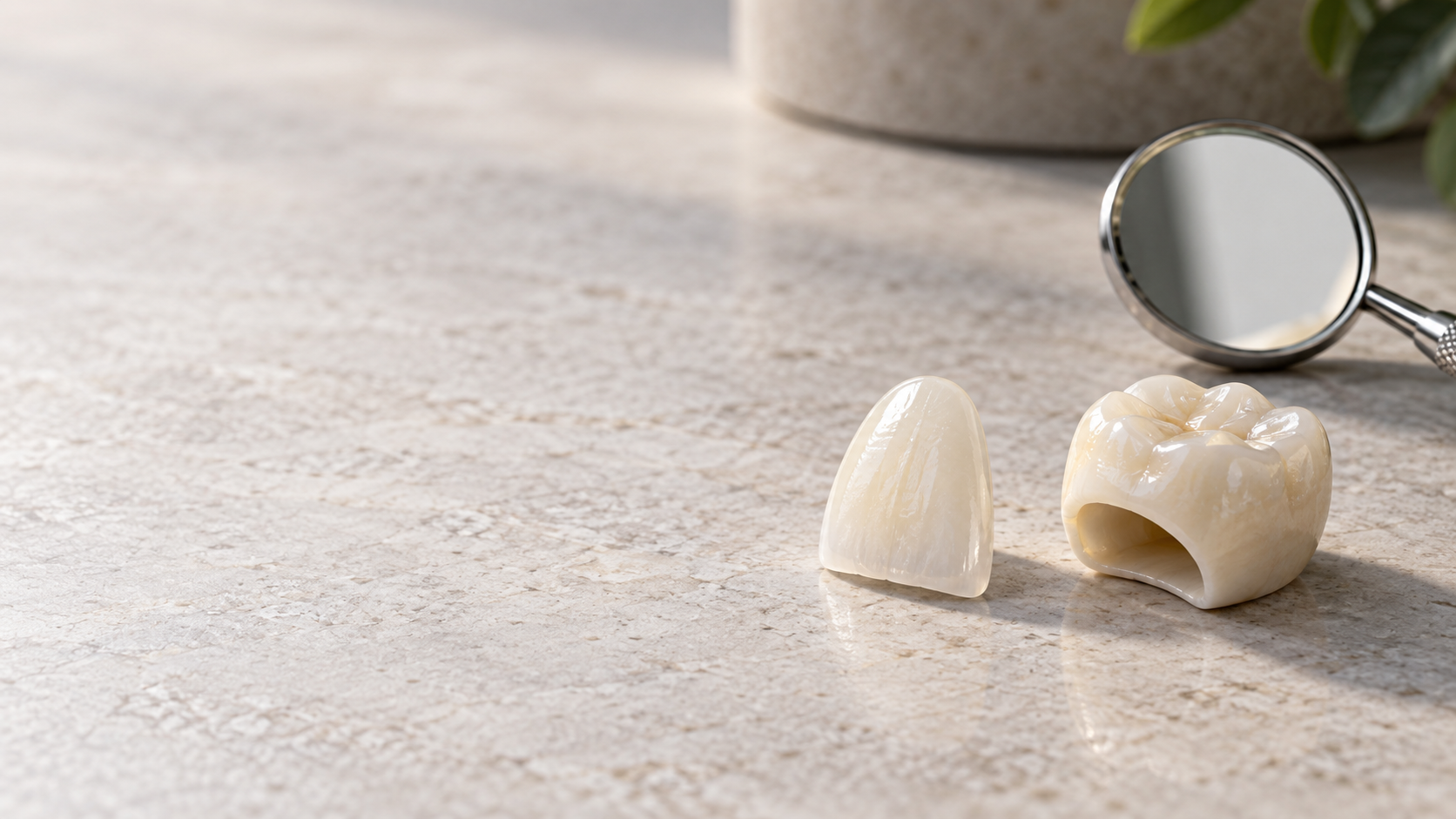
Perhaps you had veneers fitted years ago and one no longer looks quite like the others. Or an old crown feels different when you bite. You may be thinking about replacing the work altogether, especially if you would like to update your smile.
The age of a veneer or crown alone does not tell you whether it needs replacing. What matters is the condition of the restoration, the tooth beneath it, your gums and the way your teeth meet. Sometimes a small repair is possible. In other cases, replacing it may be the better option. The first step is finding out what has changed.
What signs should you look out for?
Arrange a dental appointment if a veneer or crown feels loose, has chipped or cracked, causes discomfort, or no longer feels right when you bite. A change in the gum around it is also worth discussing with your dentist. A broken or loose crown or veneer should be assessed rather than ignored, even if it is not painful.
You might also want a review for aesthetic reasons. Perhaps one crown looks darker than the teeth around it, the shape of older veneers no longer feels like you, or you are considering a wider change to your smile. That conversation can start with what bothers you, without assuming that every existing restoration must be replaced.
Can an old veneer or crown be repaired?
It depends on what has happened. A dentist may be able to repair or re-bond a veneer in some circumstances. A larger fracture, a poor fit or a problem with the tooth underneath may call for a different approach. Veneers can chip, wear or loosen over time, and the appropriate solution depends on the findings of an examination.
It is particularly important to check the health of the tooth and gums before planning a new aesthetic result. Covering a problem such as decay or gum disease with a new restoration would leave its cause untreated.
What if the problem is the colour?
Natural teeth and dental restorations do not respond to whitening in the same way: whitening does not change the colour of veneers or crowns. If the surrounding teeth have changed shade, or an older restoration no longer blends in, whitening alone may make the difference more noticeable.
That is why it helps to discuss your whole smile before choosing a treatment. Your dentist can assess the existing work, the colour of your natural teeth and the result you would like to achieve, then explain which options are appropriate.
Do you have to replace everything at once?
Not necessarily. If several veneers or crowns were fitted together, you may worry that replacing one will mean replacing them all. The answer depends on their condition and whether a new restoration can be made to sit comfortably and look harmonious alongside the others.
At Marbella Dental Arts, we would start by assessing what can be kept and what needs attention. If treatment is recommended, the plan should explain which teeth are involved, why, and what result is realistic. Our clinic offers veneers and crowns, including CEREC restorations that can be made in one visit for suitable cases; an examination is needed to determine whether that process is appropriate for you.
What should you bring to your appointment?
If your previous dentist gave you information about the material used or photographs from your original treatment, bring them along. It also helps to explain when you noticed the change and whether you grind your teeth, have had any discomfort or are mainly concerned about appearance.
Most of all, be specific about what you hope to change. “I want a more natural colour” and “this crown hurts when I bite” are very different starting points, and both deserve a clear answer.
If you are concerned about old veneers or crowns, book a review before deciding to replace them. Marbella Dental Arts is located on Avenida Manolete, in Nueva Andalucía, Marbella. We can examine your existing dental work and discuss the options that make sense for your teeth and your smile. Book an appointment at Marbella Dental Arts.