One permanent tooth starts coming through at an angle, another appears behind its neighbour, and there does not seem to be enough room for them all. As children’s teeth develop, these changes can leave parents wondering whether to wait or arrange an orthodontic assessment.
Crowded teeth in children occur when there is insufficient space for the teeth to line up properly. Teeth may overlap, rotate or emerge outside the normal line of the dental arch. An assessment helps establish the extent of the crowding and whether treatment is appropriate.
Invisalign First may be an option for some growing children. At Marbella Dental Arts, we explain five questions worth exploring when your child’s teeth appear crowded.
1. What causes crowded teeth in children?
The relationship between tooth size and the available space in the mouth is an important factor. When teeth do not have enough room, they may emerge in positions that prevent them from lining up correctly.
The timing of tooth loss also matters. Losing a baby tooth prematurely, for example through decay or an accident, can affect the space available for the permanent teeth.
An assessment therefore needs to look beyond the tooth that appears crooked. The clinician will consider the developing dentition, the teeth that have yet to emerge and how the upper and lower teeth fit together.
If your child loses a baby tooth earlier than expected, ask your dentist whether monitoring or measures to preserve the space are needed.
2. Will crowded teeth straighten themselves as the child grows?
Children’s mouths continue to change, but parents should not assume that every space problem will resolve with growth. Equally, an irregular-looking tooth does not automatically mean that treatment must begin immediately.
An orthodontic assessment helps distinguish between changes that can be monitored and problems that may benefit from earlier intervention.
The American Association of Orthodontists identifies significant crowding as one of the concerns that may warrant early treatment. It also emphasises that an early assessment does not mean every child will need an appliance straight away.
The useful question is what can reasonably be expected as your child develops, and what the implications of treating now or waiting would be.
3. How can Invisalign First help with crowded teeth in children?
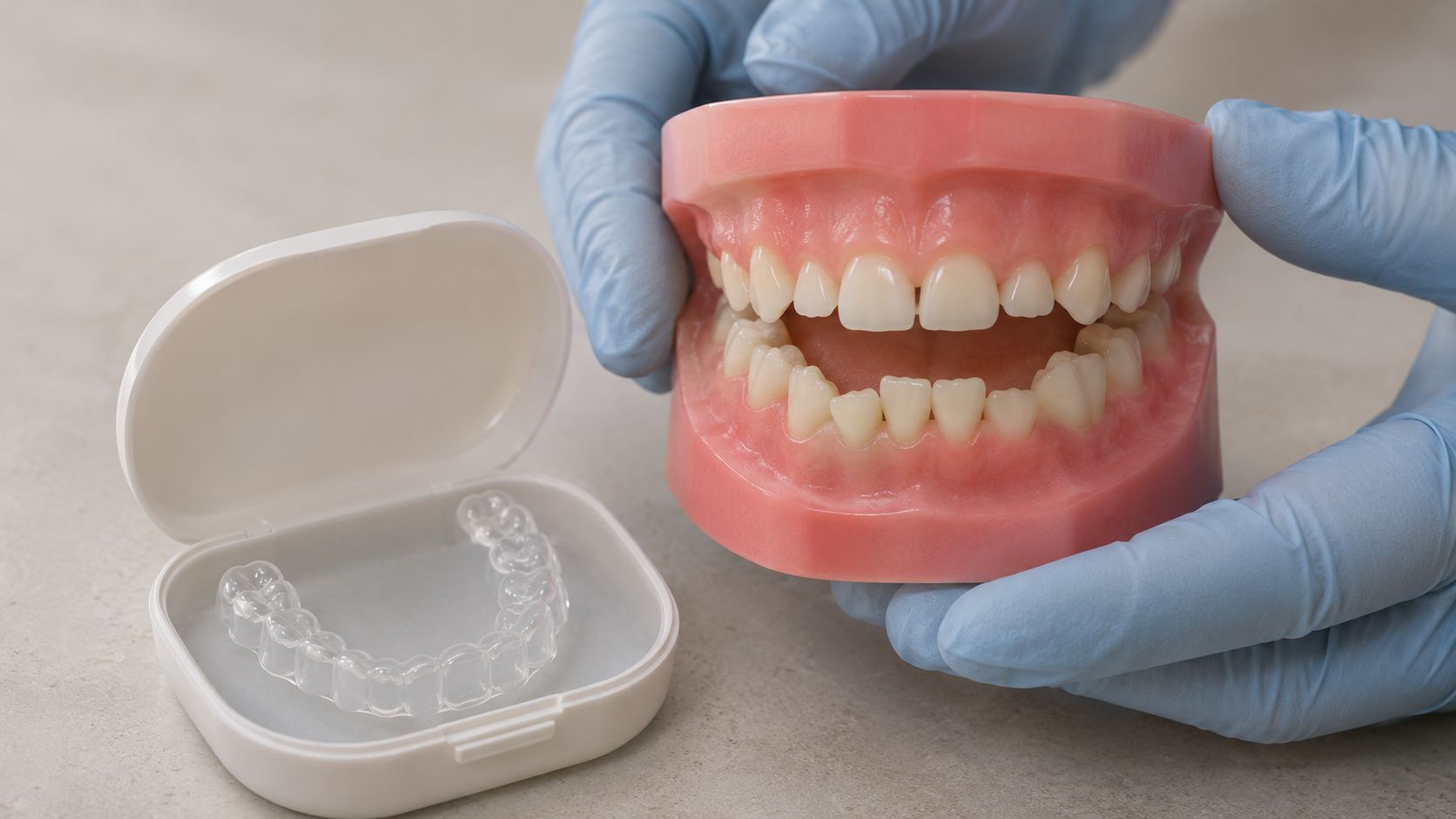
Invisalign First is a clear aligner system designed for growing patients. It can be used during mixed dentition, when baby teeth and permanent teeth are present together.
Its applications include treating certain cases of crowding. The system also incorporates features for planned dental arch expansion and for accommodating erupting permanent teeth. You can find further details on the official Invisalign First website.
This does not mean every child with crowded teeth needs the same treatment. Before recommending Invisalign First, the clinician must establish how much space is lacking, which movements are required and what can appropriately be achieved at that stage.
Dental arch expansion with aligners and orthopaedic expansion of the upper jaw are different procedures. The assessment determines which approach, if any, is needed.
4. Is Invisalign First always the right option?
The choice of appliance depends on the problem being addressed. Early orthodontic treatment can involve different fixed or removable appliances. In some cases, monitoring development without starting treatment is the appropriate recommendation.
When discussing crowded teeth in children, useful questions include:
- What is causing the lack of space?
- What would treatment aim to achieve at this stage?
- What alternatives are available?
- Why is one approach being recommended?
- What involvement will be needed from the child and family?
Our orthodontic treatments in Marbella page provides an introduction to the options assessed at Marbella Dental Arts.
5. Will further orthodontic treatment be needed later?
Early treatment has specific objectives, but the child’s teeth and bite continue to develop afterwards. Follow-up needs to take account of these changes and the arrival of further permanent teeth.
Treating crowding during childhood does not guarantee that no further orthodontic treatment will be needed. Some children require a second phase later to align their permanent teeth and refine their bite.
Before starting, ask what the first phase includes, how progress will be reviewed and what follow-up is expected. Understanding the proposed stages helps families make an informed decision.
For more information about assessment and planning with clear aligners, visit our Invisalign in Marbella page.
An assessment for crowded teeth in children at Marbella Dental Arts
If your child’s teeth appear overlapping, rotated or short of space, an assessment can help establish how their mouth is developing and whether treatment or continued monitoring is appropriate.
At Marbella Dental Arts, our children’s dentistry and orthodontic services help families understand their child’s dental needs and the available treatment options.
You can find us at Avenida Manolete, 20, Marbella, near Puerto Banús.
Book an appointment, call +34 952 817 110 or email info@marbelladentalarts.com.